Major Sports Venues and Training Facilities in the DFW Metroplex
The Dallas–Fort Worth Metroplex is home to some of the most prominent sports venues in the United States. From NFL and MLB stadiums in Arlington to NBA, NHL, WNBA, college football, NASCAR, and rodeo facilities, DFW’s sports infrastructure plays a major role in both regional identity and economic impact.
These venues not only host professional teams but also attract national championships, international tournaments, concerts, and large-scale community events throughout the year.
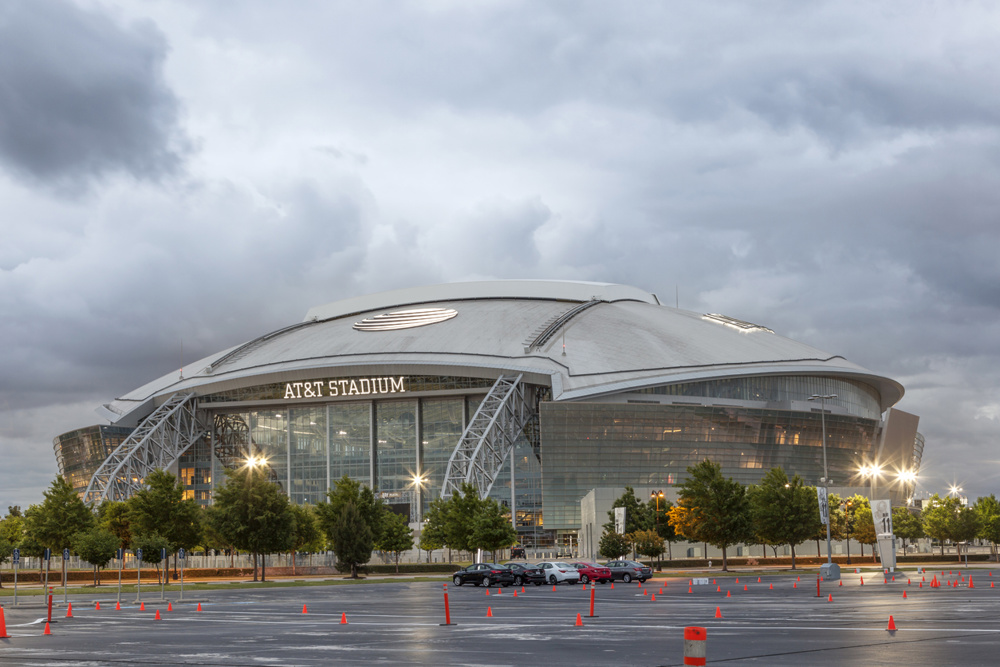
AT&T Stadium: Arlington’s NFL Showcase
Opened in 2009, AT&T Stadium in Arlington serves as the home of the Dallas Cowboys. The stadium has a seating capacity of approximately 80,000, expandable to over 100,000 with standing-room configurations for major events.
The retractable roof spans roughly 660,800 square feet, supported by two large steel arches rising approximately 292 feet above the field. The roof can open or close in about 12 minutes, weather permitting.
One of its most recognizable features is the massive center-hung video board, among the largest in professional sports. The stadium also includes more than 300 suites, multiple club spaces, and extensive meeting and event facilities.
Beyond NFL games, AT&T Stadium hosts college football championships, international soccer matches, concerts, boxing events, and major entertainment productions.
Arlington’s Role in Hosting Major Global Events
Arlington has become a major hub for global sporting events, elevating the Metroplex’s international profile. AT&T Stadium in Arlington will host nine matches during the 2026 FIFA World Cup, more than any other venue in the United States, including a semifinal and multiple knockout games during the June–July tournament.
The World Cup’s arrival has prompted years of preparation involving transportation, hospitality, and fan zone planning, with regional leaders projecting substantial economic impact from international visitors and media.
In addition to soccer, AT&T Stadium has held marquee entertainment events like Super Bowl XLV and WrestleMania 32, drawing national attention and significant tourism spending to the region.
American Airlines Center: Home of the Mavericks and Stars
Located in Victory Park in downtown Dallas, the American Airlines Center (AAC) opened in 2001, replacing Reunion Arena.
The arena seats approximately:
- 19,200 for basketball
- 18,500 for hockey
It is home to the Dallas Mavericks (NBA) and Dallas Stars (NHL).
Designed by David M. Schwarz Architects and HKS, the arena supports concerts, family shows, and national touring productions. Naming rights were secured by Fort Worth-based American Airlines in 1999.
Both teams’ long-term arena plans remain under discussion, as leases extend into the early 2030s.
Globe Life Field: Climate-Controlled Baseball in Arlington
Opened in 2020, Globe Life Field serves as the home of the Texas Rangers. The stadium seats approximately 40,300 fans and was built at a cost of roughly $1.1–$1.2 billion.
Its retractable roof spans approximately 5.5 acres and can open or close in about 12–15 minutes. The climate-controlled environment was specifically designed to address the extreme summer heat that impacted games at the former Globe Life Park.
Key field dimensions include:
- Left Field Line: 329 feet
- Center Field: 407 feet
- Right Field Line: 326 feet
The stadium features multiple premium spaces, including club seating, suites, and elevated social areas such as the Sky Porch.
Toyota Stadium and the Cotton Bowl: DFW Soccer Venues
Toyota Stadium in Frisco opened in 2005 and seats approximately 20,500. It is home to FC Dallas (MLS) and includes the National Soccer Hall of Fame, which relocated to Frisco in 2018.
In 2024, renovation and expansion plans were announced that will increase seating and modernize amenities ahead of major international competitions.
In Dallas, the historic Cotton Bowl Stadium in Fair Park remains a major soccer and football venue. With a capacity of over 90,000, it hosts the annual Red River Rivalry (Texas vs. Oklahoma), international soccer matches, and the State Fair Classic.
Ford Center at The Star: Cowboys Headquarters in Frisco
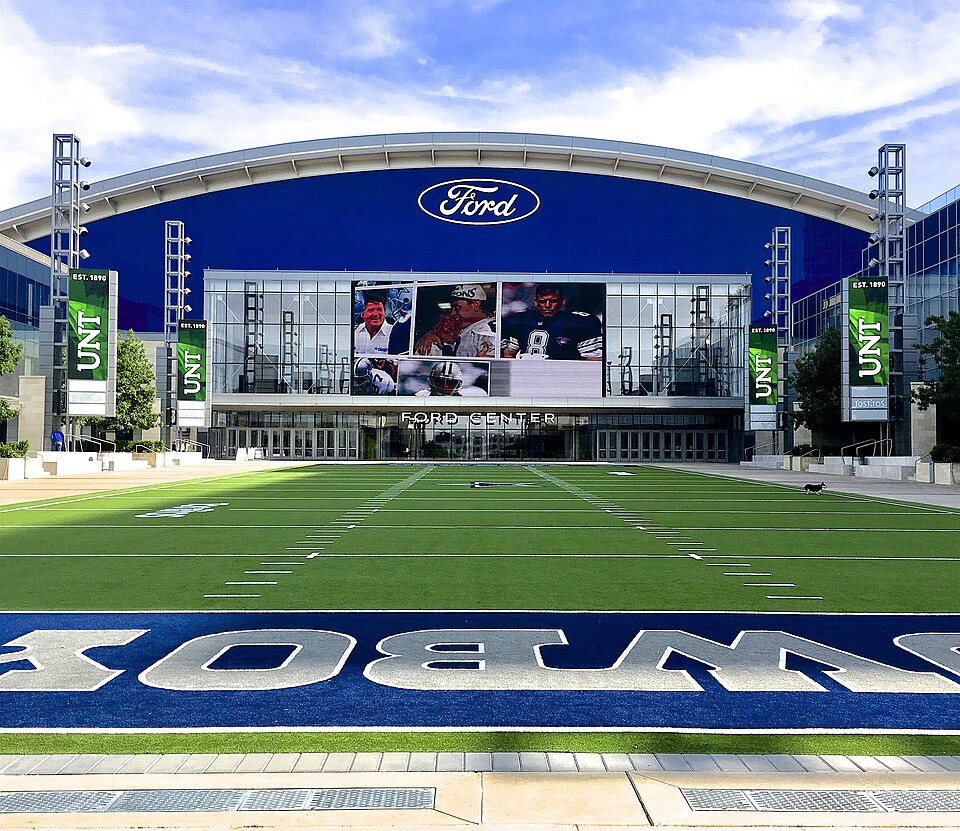
Opened in 2016, the Ford Center at The Star serves as the Dallas Cowboys’ world headquarters and practice facility.
The indoor stadium seats approximately 12,000 and is shared with Frisco ISD for high school football games and graduations.
The larger 91-acre development includes:
- The Cowboys’ administrative offices
- Practice fields
- The Omni Frisco Hotel
- Retail and dining
- Cowboys Fit gym
The venue has also hosted boxing events and community programs, reflecting its hybrid public-private model.
Training Facilities for MLB, MLS, and NBA Teams
Beyond game day venues, the DFW region offers state-of-the-art training facilities for professional teams across major U.S. sports.
- MLB – Texas Rangers: The Rangers’ spring training and player development complex in Surprise, Arizona, is part of offseason prep, but their regular practice facilities and rehab programs are supported locally through Globe Life Field infrastructure and associated training spaces in the Dallas–Fort Worth area.
- MLS – FC Dallas: Toyota Stadium in Frisco doubles as the home and training base for FC Dallas, with adjacent practice fields and youth academies that support player development throughout the year.
- NBA / G League – Dallas Mavericks: The Comerica Center in Frisco hosts the Texas Legends (NBA G League), which serves as a development affiliate for the Dallas Mavericks and offers modern practice and game facilities.
These environments allow professional and developmental athletes to prepare and compete at a high level, while also engaging local fans with open-house sessions, youth camps, and community programs.
College Park Center: WNBA and UTA Basketball
Located on the University of Texas at Arlington campus, College Park Center opened in 2012.
The arena seats approximately 7,000–7,500 for basketball and serves as the home of:
- The Dallas Wings (WNBA)
- UT Arlington Mavericks basketball
The venue hosts concerts, graduations, conferences, and community events throughout the year.
TCU and SMU Football Stadiums
In Fort Worth, Amon G. Carter Stadium (TCU) seats approximately 45,000–47,000, depending on configuration. The stadium underwent major renovations between 2010 and 2012, followed by premium seating upgrades in 2020.
In Dallas, Gerald J. Ford Stadium (SMU) seats approximately 32,000 and has also seen phased renovations and facility enhancements.
Both venues host NCAA football games and regional sporting events.
Texas Motor Speedway: NASCAR in Fort Worth
Located in Fort Worth near Alliance, Texas Motor Speedway is a 1.5-mile quad-oval track that hosts NASCAR and other major racing events.
The track’s seating capacity has fluctuated due to renovations, with estimates generally ranging around 100,000+ for major events (earlier capacity figures exceeding 190,000 have since been reduced).
The complex includes luxury suites, infield camping, and multiple track configurations.
Will Rogers Coliseum: Fort Worth’s Rodeo Legacy
Built in 1936 as part of the Texas Centennial celebration, Will Rogers Coliseum anchors the Will Rogers Memorial Center in Fort Worth’s Cultural District.
The coliseum seats approximately 5,600 and hosts the Fort Worth Stock Show & Rodeo, equestrian competitions, and livestock exhibitions.
The surrounding complex includes additional arenas, exhibit halls, and the adjacent Will Rogers Auditorium.
This venue remains central to Fort Worth’s Western heritage and livestock traditions.
Esports Venues and Emerging Sports Facilities
The Metroplex is also embracing esports and emerging competitive sports venues. Esports Stadium Arlington, opened in 2018, is one of North America’s largest dedicated competitive gaming facilities, with a permanent stage, spectator seating, and advanced gaming infrastructure for live esports events and community competitions.
Esports expanded further with venues in the region hosting professional league matches and grassroots tournaments, while university-level facilities such as the new UT Dallas esports center are poised to support collegiate competitive gaming.
In addition to esports, other venues like the Credit Union of Texas Event Center in Allen have hosted major competitive gaming championships and league competitions, reflecting the region’s blend of traditional and digital sports entertainment.
Economic Impact of Sports Tourism in DFW
Sports tourism makes a substantial contribution to the North Texas economy. Major events like NFL games, MLS matches, NASCAR weekends, college bowl games, and international tournaments like the FIFA World Cup draw visitors who spend on lodging, food, transportation, and entertainment.
Hosting nine World Cup matches is expected to draw millions of fans and boost local tax revenues, hotel occupancy rates, and international visibility.
Historic events like Super Bowl XLV and regular season matchups at premier venues generate hundreds of millions in direct and indirect spending. Additionally, esports championships and league events at venues such as Esports Stadium Arlington and the Credit Union of Texas Event Center extend tourism demand beyond traditional sports seasons.