Pop Culture and Women Drivers in Rally: the Pioneers and the Modern Stars Changing the Narrative
If you grew up thinking rally was a boys-only legend, it wasn’t because women weren’t there. It’s because pop culture taught you a very specific highlight reel. Rally’s mainstream mythology has been packaged for decades through a handful of names—fast men, fearless crashes, iconic one-liners—then looped through documentaries, and video games. Colin McRae became a household name not only because he was brilliant, but because millions of people “met” rally through a controller.
Meanwhile, you probably never got to “meet” Pat Moss-Carlsson the same way, even though she did something historically undeniable. She became the first woman to win an international rally outright in 1960. That gap—between what happened and what got remembered—is the real story. Women have been competing, winning, building teams, and pushing the sport forward for generations. What’s changing now is that the infrastructure of visibility is finally starting to catch up.
Today's Female Rally Stars You Should Know
The rally world is experiencing a seismic shift as women break through barriers that stood for decades. You'll find elite Rally Raid competitors like Sara Price, who's claimed four Dakar stage victories as the first female American driver in the competition's premier category. Cristina Gutiérrez is pursuing a podium finish in her tenth Dakar appearance, while Valentina Pertegarini made history as the first woman to win an FIA World Rally-Raid Championship title in 2024.
Beyond the desert, rising young rally stars are emerging through structured development programs. The Beyond Rally initiative has identified fifteen promising drivers from thirteen countries, including Madelyn Tabor and Hannah Jakobsson, creating pathways previously unavailable.
Enni Mälkönen's 2022 WRC3 Co-Driver's Championship victory demonstrates women's competitive excellence across all rally disciplines. Dania Akeel captured third in the 2025 FIA Rally-Raid World Championship for Challenger after winning the Abu Dhabi Desert Challenge.
Women Rally Drivers Who Dominated the 1960s-80s
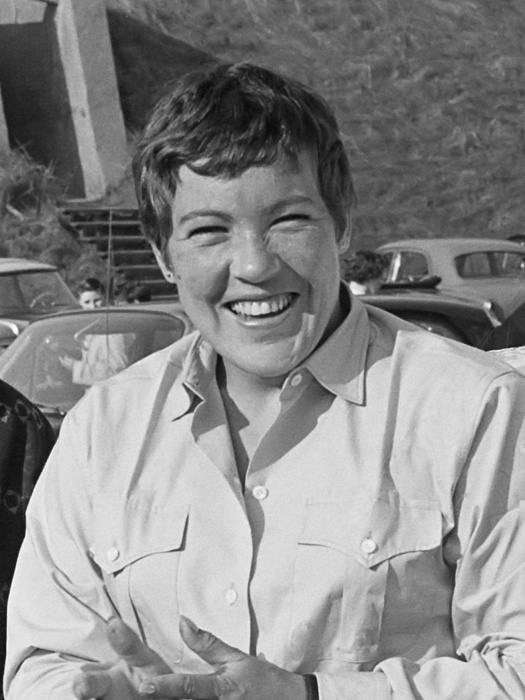
Pioneering spirits defined rally racing's golden era as women competed against institutional resistance and mechanical challenges throughout the 1960s-80s. These Rally Trailblazers from 1960s like Diana Margulies and Carolyn Tyler proved women could master international competition, with Tyler winning the Ladies' privateer prize at the 1966 Tulip Rally.
You'll recognize these International Championship Competitors from 1970s who shaped the sport:
- Pat Moss-Carlsson - Competed in WRC 1973-1974, achieving a 28th-place best finish
- Judy Simpson - Finished 60th overall at 1978 RAC Rally driving Ford Escort RS2000
- Louise Nolan - Dominated Irish rallying throughout the 1980s, placing 17th at 1987 Cork 20 International Rally
Sandy Lawson entered the RAC Rally in a Mini Cooper in 1971 and continued competing with various vehicles including a Toyota Celica throughout the mid-1970s. Their determination opened doors you see today's competitors walk through confidently.
Rally's Pioneering Women: Pat Moss to Michèle Mouton
Male drivers dominated rally headlines during the 1950s and 60s, but Pat Moss-Carlsson steadily broke through the sport’s gender barriers with performances that demanded recognition. One of her most important achievements came at the 1960 Liège-Rome-Liège Rally, where she became the first woman to win a major international rally outright. Driving an Austin-Healey 3000, she defeated competitors in more powerful Porsche machines.
Over the course of her career, she won five European Ladies’ Rally Championship titles and a record eight Monte Carlo Coupe des Dames trophies, a level of dominance unmatched by any female driver of her time. She achieved these results despite often competing in less competitive cars while racing against male rivals.
Although her advocacy for women in motorsport after retirement was relatively limited, her success helped pave the way for Michèle Mouton. Mouton is the only other female rally driver of comparable impact, who later won four World Rally Championship events. Pat Moss-Carlsson was also the younger sister of legendary driver Stirling Moss. Both siblings were accomplished show jumpers before eventually pursuing careers in motorsport.
From Film to Video Games: Rally's Missing Women
Popular culture's portrayal of rally racing reveals a stark absence: women drivers rarely appear in films, documentaries, or video game franchises despite their proven track records. You'll find major racing games like Colin McRae Rally and DiRT Rally historically featured few female driver options, limiting representation where millions of gamers experience the sport.
This visibility gap directly impacts career advancement:
- Global media spotlights remain focused on male drivers, skewing public perception of who belongs in rally
- Industry sponsorship opportunities diminish when women lack media presence, creating funding barriers
- Gaming franchises shape motorsport culture yet consistently underrepresent female competitors
When women are absent from rally’s entertainment landscape, their real-world achievements often go unnoticed. This invisibility reinforces a cycle of exclusion in competitive motorsport. Only about 30% of esports participants are estimated to be female. However, initiatives like Veloce’s Ultimate Female Racer Championship highlight the untapped talent waiting for greater representation in racing games and digital motorsport platforms.
Check out MrPopCulture.com and learn more about pop culture trends in the Rally sport.
How Female Rally Drivers Built Audiences on Social Media
Rally has always been hard to “see” unless you’re already paying attention. Stages are spread out, coverage is fragmented, and the most intense moments often happen far from a main broadcast. Social media solved that visibility gap—and many female rally drivers used it as a direct-to-fan shortcut. Instead of waiting for highlights, they built their own.
Short-form clips of onboards, helmet-cam runs, and service-park chaos let audiences experience rally as texture, not just results. That style of content also plays perfectly on platforms that reward immediacy: one clean launch, and you’ve got a story people can follow without knowing the whole championship table.
What makes these audiences stick is the mix of performance and process. Female competitors often post the parts motorsport media skips: the training blocks, the navigation practice, the sponsorship grind, and the mechanical setbacks. That behind-the-scenes access turns a driver into a character you can root for week-to-week, not just a name on a timing sheet. It also reframes credibility: when people see the work—testing, fitness, notes, repairs—the conversation shifts from “representation” to “respect”.
Why Rally Coverage Still Ignores Top Women Competitors
Despite recent improvements in rally coverage featuring women competitors, significant gaps persist in how mainstream motorsport media prioritizes these stories. While dedicated platforms like Females in Motorsport reach millions and events like Dakar Rally 2024 featured 28 articles on women drivers, you'll notice disparities remain.
The challenges facing women rally drivers include:
- Unequal promotional investment – Male competitors receive disproportionate pre-race buildup and post-stage analysis compared to equally qualified women
- Lack of sponsorship opportunities for women – Limited commercial backing restricts media visibility and competitive resources
- Editorial prioritization – Mainstream outlets still default to male-dominated narratives despite women comprising 40% of Formula One's global fanbase
You're witnessing progress, but comprehensive comparative data reveals the industry hasn't achieved coverage parity. Remote production capabilities have enabled 39 days of planning and research to document women's achievements across both FIA and FIM disciplines. It demonstrates that geography does not have to limit comprehensive coverage.
The Teams and Series Where Women Rally Drivers Compete Now
Women rally drivers now compete across four distinct competitive platforms that offer structured pathways from development programs to elite international competition. You'll find the World Rally-Raid Championship hosting competitors like Cristina Gutiérrez, Laia Sanz, and Dania Akeel racing in Ultimate and Challenger categories with manufacturers including BRP Can-Am and Polaris.
The Dakar Rally remains the premier desert marathon, where Sara Price competes in the Stock class targeting the first American woman victory. Meanwhile, endurance racing programs like AE Victory Racing's two-car Toyota Supra GT4 EVO2 effort provide multi championship opportunities through World Racing League competition.
These platforms create real pathways—from developmental shootouts. It offers fully-funded seats to professional racing alongside established champions across international rally-raid and circuit racing series. Programs emphasize mental preparedness, communication, and team building to develop complete athletes who thrive in high-performance environments.
Why This Change Matters Now
Calling rally’s female pioneers and modern stars “pop culture” is not a gimmick—it’s the point. Sports history doesn’t become cultural history until people can see it. In 2026, the way we learn sports isn’t primarily through full events; it’s through clips, edits, games, and social storytelling. Visibility isn’t decoration—it’s infrastructure. It determines who gets remembered, who gets sponsored, who gets invited back.
Rally is also in a moment where audiences want new archetypes. The culture is tired of the same hero template. We’re seeing a broader appetite for athletes who rewrite what “belongs” looks like, not by asking for permission, but by winning anyway. Women in rally fit that appetite naturally because the story isn’t manufactured. It’s overdue.
The New Rally Canon Is Still Being Written
Rally has always been a sport of extremes: weather, terrain, endurance, nerve. Women have been mastering those extremes for decades. What’s new is that the culture around the sport is beginning to make room for that truth in the places that shape memory—games, media, highlight culture, and fandom.
Pat Moss-Carlsson didn’t need a reboot to be real. Michèle Mouton didn’t need permission to win. Today’s competitors aren’t asking to be included in rally history—they’re actively writing it. The only question left is whether pop culture will keep up this time, and finally tell the story like it’s always been: not “women in rally” as a special category, but rally—full stop.
Conclusion
Rally has never lacked women with the skill to win—it has lacked a cultural engine willing to remember them as part of the main story. From Pat Moss-Carlsson proving the point decades ago to today’s drivers and co-drivers stacking stage wins and titles, the evidence has always been there.
What’s changing now is the visibility infrastructure. More pathways into the sport, more sustained seats, and more storytelling that treats women as contenders rather than exceptions. If pop culture is where rally becomes “real” for most people—through clips, games, edits, and headlines—then representation isn’t a bonus; it’s the future.